
The home presentation guide
Space & Flow
Prepare your home for sale. Help buyers picture life here.
Light / Colour / Styling / Viewings
Practical changes. A more inviting home.
A home buyers can imagine living in
Create the right feeling.
A practical companion to your wider seller's guide.
Buyers need to understand the space, notice its best features and feel comfortable exploring it. Good presentation helps them do all three.
This guide focuses on the details: furniture placement, daylight, dark colours, surfaces, storage and the finishing touches that help a home feel cared for. Use the ideas that suit your property, budget and daily life.
Think of energy flow as the ease of moving through your home: clear routes, connected rooms and inviting places to pause. Keep that feeling in mind from the first listing photograph to the final viewing.
Start with what you already own. Buy only to solve a clear problem.
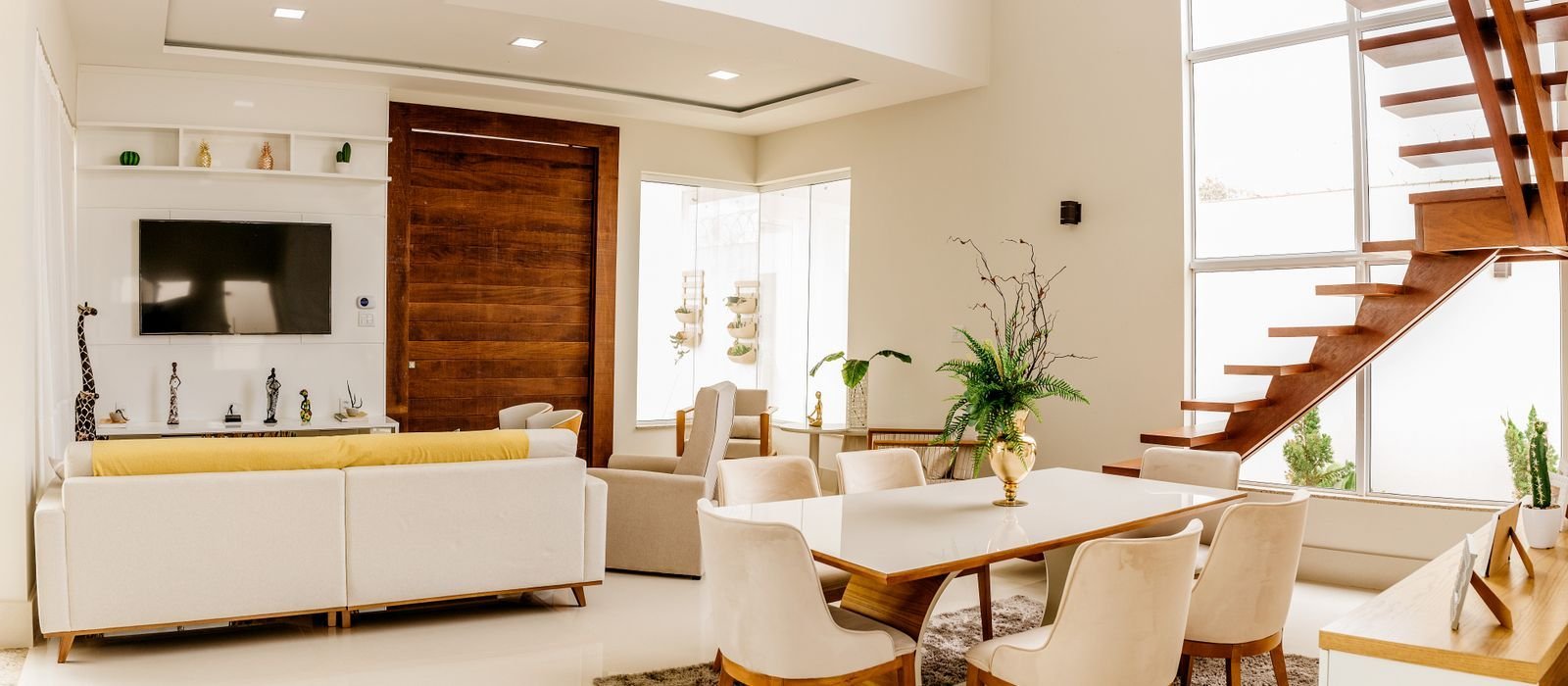
Your priorities
01 See it through a buyer's eyes
Plan before you spend.
Decide what will make the biggest difference in your home.
Take a doorway photograph
Stand at each doorway and take a simple phone photo. Look for the first thing that draws your eye: is it the window, fireplace or garden view, or a crowded surface and the back of a chair? Use this as a working record, then compare after each change.
Write a short, visible job list
Group what you notice into cleaning, repairs, layout and styling. Start with jobs buyers can see or experience: sticking doors, loose handles, marked paint and an awkward route through a room. Arrange suitable help for work beyond your skills.
Ask which buyer the room should help
Discuss the likely audience with your agent. Show a credible place to eat, work or relax, using furniture that fits. A room with four competing uses is harder to understand than one with a clear main purpose.
Edit & refresh
02 Reveal what you are selling
Let the house be seen.
Keep warmth and personality, with fewer distractions.
Declutter in manageable passes
Start with an easy drawer, shelf or worktop. Pack things you will not need before moving; donate, sell or recycle what you no longer want. Label boxes and arrange storage without filling the room you are trying to present next.
Make storage look usable
Buyers may ask to see fitted cupboards and wardrobes. Straighten shelves, remove overflow and leave some breathing room. Keep ordinary essentials accessible so the home stays workable between viewings. Tidy charging cables and paperwork as well as ornaments.
Keep a little life in each room
Reduce large collections, photo displays and strongly personal slogans. Retain a few books, an attractive plant or a favourite piece of art. Keep the best pieces visible instead of spreading small accessories across every surface.
Layout & flow
03 Make the space easy to read
Clear routes. Clear purpose.
Buyers should be able to explore without squeezing past things.
Walk the route a viewer will take
Start at the front door. Continue into the living space, towards the windows and through to the garden. Move baskets, stools and occasional tables that interrupt that route. Check the route with doors open and dining chairs pulled out.
Arrange around the strongest feature
Let a fireplace, generous window or garden outlook lead the arrangement. Position seating so conversation feels comfortable. Avoid a tall unit cutting across the first view into the room. Remove one extra piece before assuming the room needs smaller furniture.
Connect open-plan areas
Use a rug or furniture grouping to define living and dining areas. Choose a rug large enough to connect the main seating pieces where practical. Repeat one or two colours or materials between zones, while leaving an obvious route from one to the next.
Natural & soft light
04 Give every room a lift
Let light travel.
Check the room during the day and when viewings may take place.
Start at the window
Clean the glass and frames. Pull curtains clear of the pane and straighten blinds. Move large plants or furniture that block the light. Keep enough privacy for an overlooked room; a light-filtering layer can be useful. Clean lampshades and dusty light fittings too.
Add light at different heights
Use a ceiling light for general brightness, a lamp near seating and another source in a gloomy corner. Soft, diffused light should still be bright enough to see the room properly. Keep visible bulbs similar in colour so the room feels coherent. [3]
Use mirrors with a purpose
Test a mirror where it catches daylight or a pleasant view. Check the reflection from the doorway: it should not double a cluttered shelf or expose another messy room. Watch for glare, and secure the mirror properly.
Lighting principles informed by HolmeStage [3].
Dark colours
05 Rich colour, balanced light
Dark can still feel inviting.
Deep green, navy and charcoal can work beautifully with balance.
Pale bedding, a light ceiling and generous daylight balance the green wall.
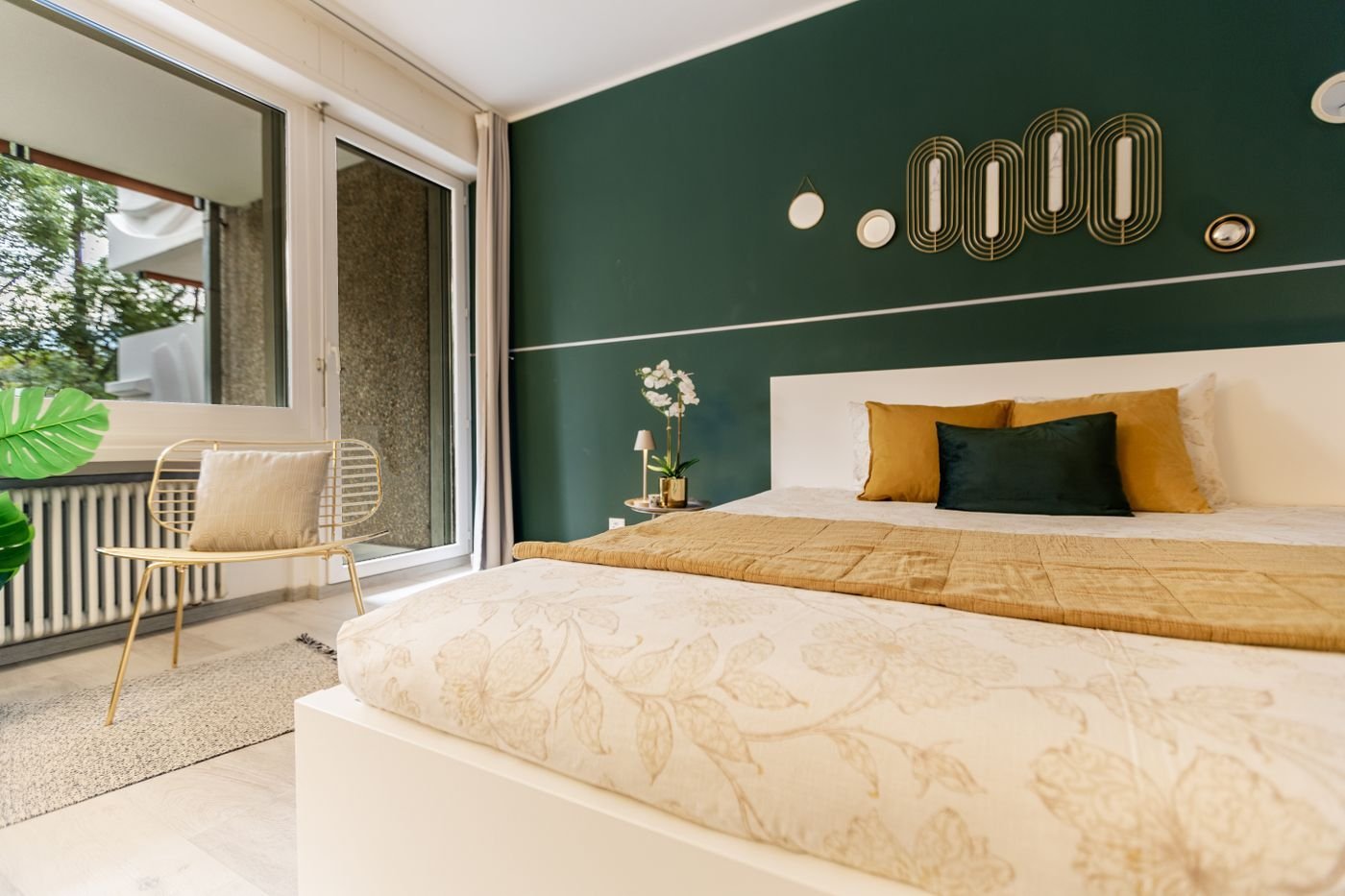
Keep the depth; lift the surroundings
Balance dark walls or furniture with enough natural light and soft, layered lighting. Try light bedding, a pale rug, lighter curtains or a lampshade that diffuses light. A little warm metal or glass can add a highlight without clutter.
Check before deciding to repaint
View the room on an overcast day and in the evening. If it still feels dim, heavy or difficult to photograph after improving the lighting, consider a softer wall colour. Test samples beside the flooring and furniture first.
Living & dining
06 Show a comfortable way to live
Room to gather.
Give buyers a clear picture of everyday life and entertaining.
Show the seating working together
Keep enough seats to explain the room, with an easy route around them. Centre cushions neatly, fold one throw and remove excess side tables. If you have dark leather or timber, soften the arrangement with lighter fabric and a well-placed lamp.
Make a focal point feel deliberate
Edit the mantel or shelving so the architecture can be seen. One appropriately sized artwork often looks calmer than many small pieces. Turn the television off for viewings and photos, and organise the equipment and cables beneath it.
Let the dining space earn its place
Clear laptops, paperwork and laundry from the table. Use a simple bowl or low vase so the tabletop remains visible. Keep chairs proportionate to the space; remove an extension leaf if it makes circulation easier. Avoid an elaborate dinner-party setting.
Kitchen & utility
07 Let the working space show
Clean, practical, welcoming.
A kitchen should feel easy to use from the first glance.
Visible worktop space and a clear route around the island explain the layout.
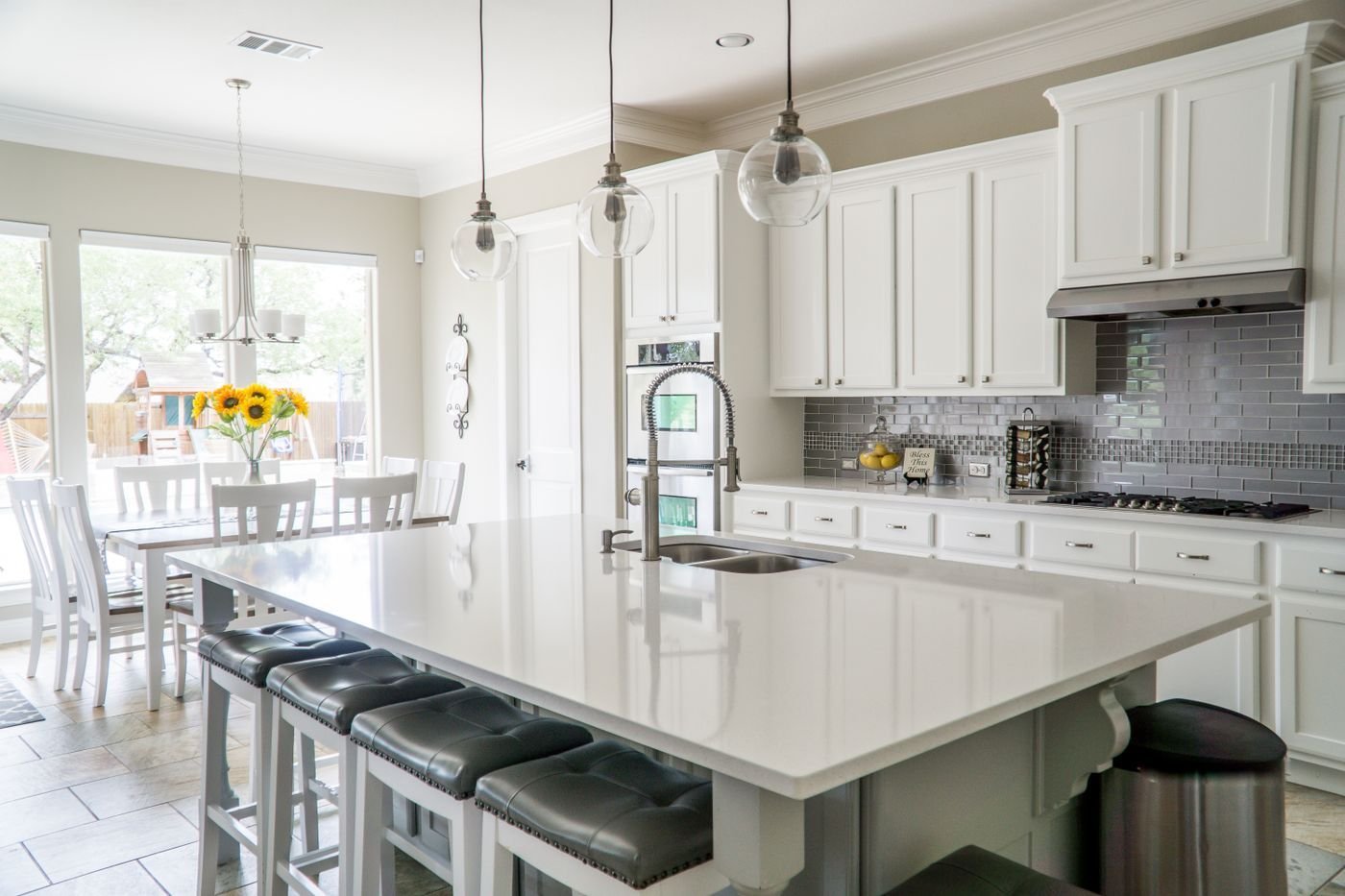
Clear a proper preparation area
Put away little-used appliances, drying racks and fridge paperwork. Keep a few useful items neatly grouped. A bowl of fruit or one herb pot is enough; leave the space around the hob and sink visibly usable.
Refresh the details buyers will notice
Clean handles, splashbacks, the extractor and the sink. Check cupboard alignment and loose fittings. Empty bins and tidy the utility area. Compare targeted repairs with your agent before committing to replacement units or a new worktop.
Kitchen preparation: see Dressed2Sell in [2] and Rightmove [4].
Bedrooms
08 Make rest feel effortless
Calm, with room to move.
Show a believable bed size and useful space around it.
A neatly dressed bed and visible floor space keep the room easy to understand.
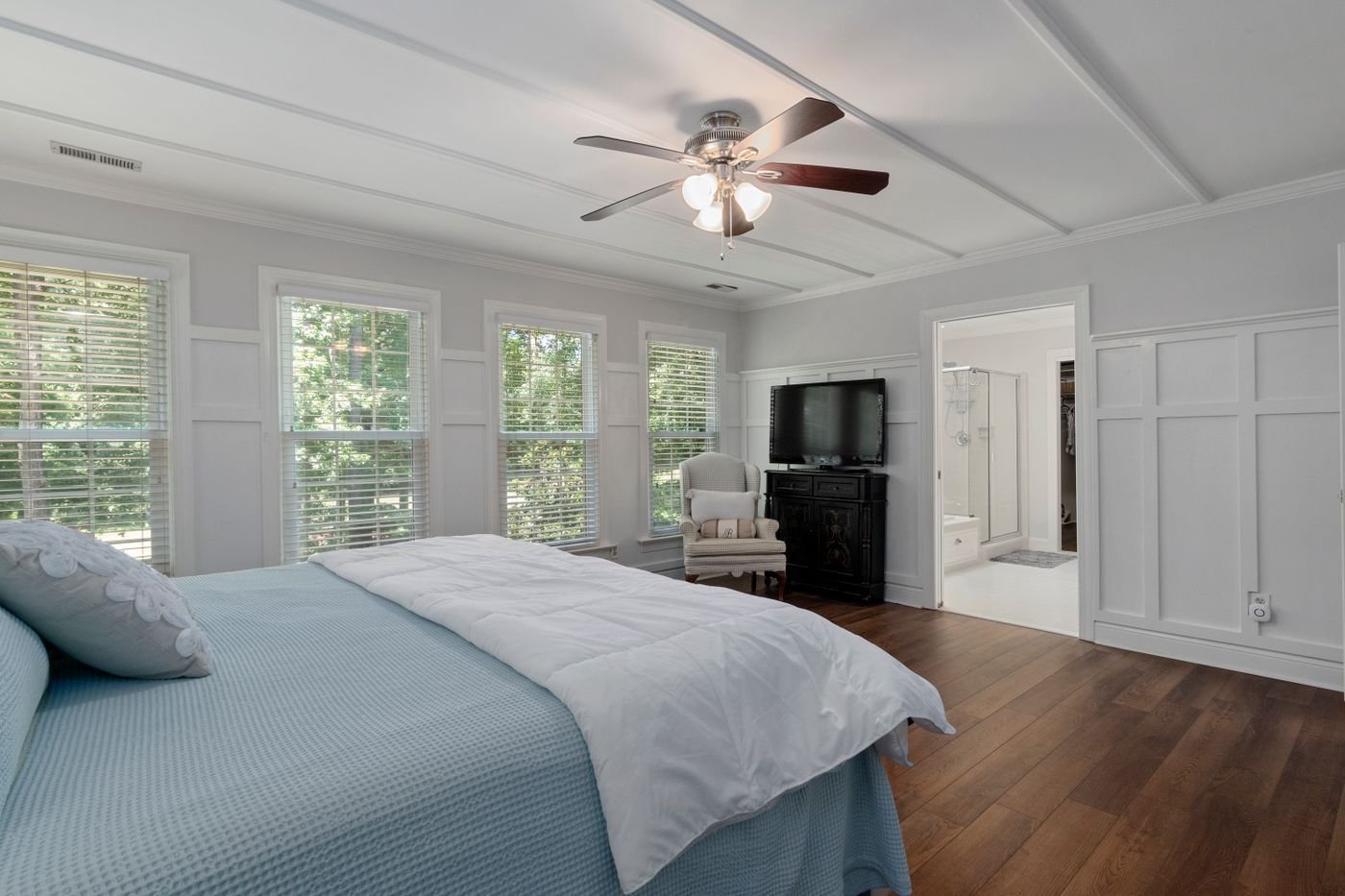
Let the bed anchor the room
Smooth the linen, choose a simple colour palette and add just enough pillows to look comfortable. Keep bedside surfaces clear, with balanced lamps where space permits. Avoid squeezing in oversized furniture to imply a capacity the room does not comfortably have.
Help each bedroom tell its story
Give the main bedroom a restful feel. In children's rooms, keep favourite everyday toys in accessible storage and reduce visual overflow. For a spare room, show a clear main use and discuss with your agent how best to demonstrate its bedroom potential.
Bathrooms
09 Small details, strong impression
Freshness buyers can see.
Clean surfaces and a cared-for finish do most of the work.
Clean the surfaces that catch the light
Polish taps, mirrors and shower glass. Remove limescale using products suitable for the finish. Pay attention to edges, grout and behind fittings. Replace worn or damaged sealant properly, dealing with any underlying moisture problem first.
Reduce the visual noise
Store toothbrushes, razors, bottles and cleaning products. Keep one neat handwash and a small number of coordinated towels. Straighten the bathmat and shower curtain, close the toilet lid and empty the bin before photographs or viewings.
Choose freshness over fragrance
Ventilate appropriately and use extraction. Wash musty towels and bathmats. Ask someone who does not live with you whether they notice an odour. Investigate persistent damp or drain smells; fragrance is not a fix for the cause.
Entrance & outdoors
10 Welcome starts at the gate
Make arrival feel easy.
Treat the approach, hallway and outdoor space as one journey.
Check what buyers see while waiting
Sweep the path, remove weeds, clean the door furniture and check the bell and house number. Move bins to their usual tidy storage area where possible. Replace a worn mat. Choose a few healthy pots that do not narrow the entrance.
Give the hallway breathing room
Keep coats and shoes to a manageable minimum. Clear post, bags and items on the stairs. Use a slim console only if the space allows it. Check that lighting works along the route, especially for late-afternoon viewings.
Show how the garden can be used
Tidy borders and paths, clean outdoor furniture and clear the route from the house. Arrange a realistic sitting or dining spot. In a small courtyard, one usable seating area can explain the space better than a crowded collection of pots and furniture.
Tricky spaces
11 Make every area understandable
Small can be useful.
Present a credible use without forcing too much into the room.
A box room or home office
Choose one main job for the room. Use a properly scaled desk and chair for a study, with tidy leads and clear space to sit down. Avoid combining a gym, guest room, office and storage room in the same first impression.
A narrow room or awkward corner
Keep a continuous route along one side. Try a shallower piece of furniture or remove a redundant one. Place art at a height that relates to the furniture. A chair and lamp can explain a reading corner if they fit comfortably.
An empty home or large room
Furniture can help buyers judge scale and possible uses. Ask your agent or a stager which rooms would benefit most from a few hired or borrowed pieces. Compare the full hire, delivery, collection and extension costs before deciding.
Before the photographs
12 Prepare before the camera arrives
Your first viewing is online.
Finish the key changes before the marketing photographs are taken.
Plan the light and the key views
Tell your photographer when the principal rooms and garden receive the best light. Discuss the features to show: a fireplace, connected kitchen-diner, usable study or outlook. Let the photographer advise on timing and the balance of daylight and lamps.
Do a complete room-by-room reset
Smooth bedding, straighten curtains, tidy towels and hide loose cables. Clear worktops, remove personal paperwork and put everyday cleaning items away. Check mirrors for reflections of clutter, washing or people standing behind the camera.
Check the edges of every scene
Move wheelie bins or vehicles from the main exterior shot where practical. Put away hoses and garden tools. Look for half-hidden baskets, a charger beside the sofa and items behind open doors. Keep real features visible; do not disguise damage with styling.
Photography preparation informed by Alx Gunn and Elaine Penhaul in [1].
Before each viewing
13 Make it easy to maintain
Your final 30-minute reset.
Prepare a small routine everyone in the household can follow.
- Air & comfort
- Ventilate beforehand where appropriate, then set a comfortable temperature. Check for cooking or pet odours and deal with the source.
- Light & routes
- Open curtains, set suitable lamps and clear the walkways. Make sure doors and access to the garden are easy to use.
- Kitchen & bathrooms
- Put dishes away, wipe sinks and worktops, close toilet lids and swap in fresh towels. Empty bins if needed.
- Living areas & bedrooms
- Straighten cushions, make beds and put laundry away. Use a designated basket for last-minute items, then store it neatly out of sight.
- Pets & privacy
- Plan a comfortable place for pets during the appointment. Put away valuables, medication, paperwork and visible personal details.
- At the door
- Remove post and stray shoes. Turn off the TV and noisy appliances where practical. Let the agent know about any access arrangements.
Your action plan
14 Start with the right jobs
Spend where it helps.
Use this page to turn the ideas into a manageable plan.
First: little or no spending
Edit belongings, move furniture, clean windows and create clear room uses. Wash textiles and tidy the entrance and garden. Recheck your doorway photographs before deciding what is still missing.
Next: targeted refreshes
Prioritise visible wear, working lighting and a neat finish. Consider paint touch-ups, a suitable lamp, fresh bedding or replacement towels where they solve a specific problem. Borrow or reuse accessories before buying several new ones.
Discuss larger spending first
Talk to Louisa before replacing kitchens, bathrooms, carpets or large furniture purely for the sale. Ask which improvement matters for this property and its likely buyers. Good presentation helps marketing, but it cannot guarantee a sale price or timescale.
My three priorities before photography
- ________________________________
- ________________________________
- ________________________________
Target photography date: ______________________________
Research & inspiration
Further reading
Advice behind the ideas.
Professional guidance, paraphrased and developed for this guide.
- Houzz: 8 Smart Styling Tips to Help You Sell Your Home Quickly — Interviews with Alx Gunn, Elaine Penhaul and Titilola Ajayi-Jones. Photo audits, preparation and buyer-focused presentation.
- Houzz UK: What is a Home Stager and Do You Need One? — Advice from Burbeck Interiors and Dressed2Sell on entrances, decluttering and room refreshes.
- HolmeStage: Lighting — The Key to Effective Home Staging — Professional staging guidance on combining general, task and accent lighting.
- Rightmove: Preparing your home for sale — Practical guidance on clear room functions, presentation and getting ready for viewings.
Photography
- Jonathan Borba / Pexels — Cover photograph
- Image Hunter / Pexels — Dark-colour bedroom, page 7
- Mark McCammon / Pexels — Kitchen, page 9
- Curtis Adams / Pexels — Bedroom, page 10
Sources accessed September 2026. Interior photos illustrate styling ideas, not Louisa's listings. Louisa's portrait was supplied by her.